
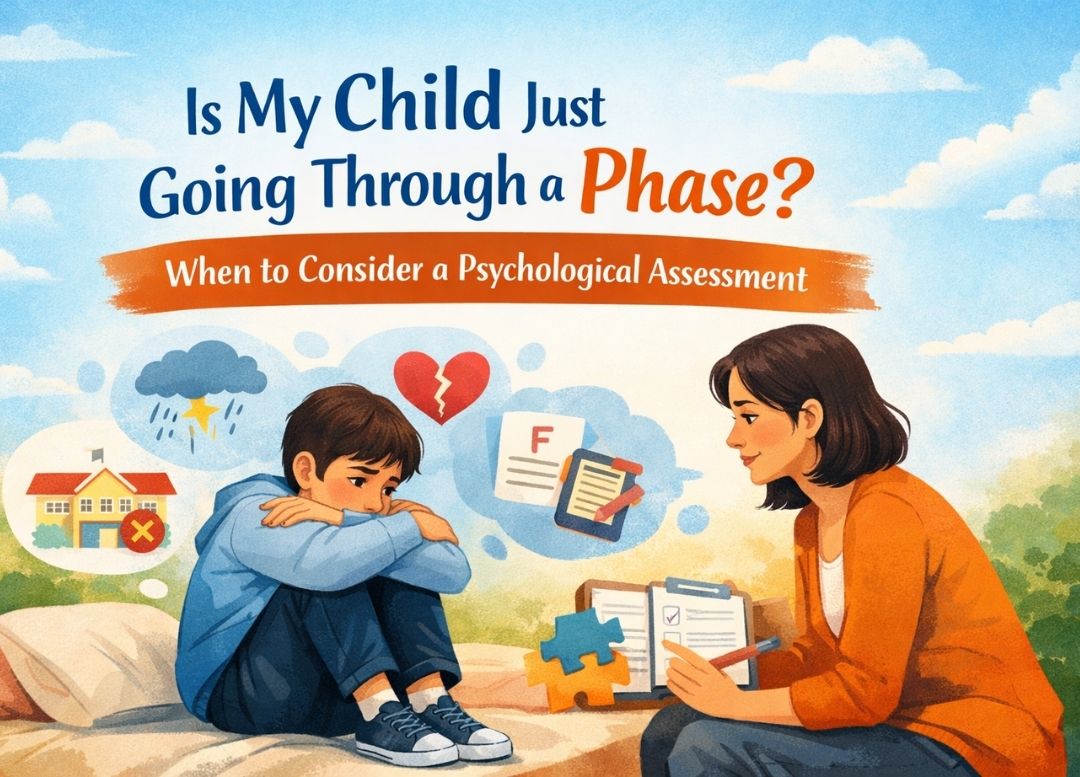
As parents, one of the most common questions I hear in my practice is:
“Is this just a phase?”
Childhood and adolescence are full of transitions. Mood swings, changing friendships, new interests, and emotional ups and downs are often part of growing up. But sometimes, what looks like a “phase” may actually be a sign that a child needs deeper understanding and support.
In India especially, many parents are unsure about when behavioural changes are normal and when they require professional attention. Some may overlook symptoms as part of natural development. Others may misinterpret distress as stubbornness, laziness, or indiscipline. And many simply do not know that child psychological assessment is available — or how helpful it can be.
Over the years, I have worked with numerous families navigating this confusion. This article is meant to guide you with clarity and reassurance.
What Is a “Phase” in Child Development?
Children go through predictable developmental stages. These may include:
- Increased emotional sensitivity during adolescence
- Temporary clinginess during transitions
- Testing boundaries at certain ages
- Short-term academic dips due to adjustment
- Changing interests and peer groups
These shifts are usually temporary, manageable, and improve with time and support.
However, not all behavioural changes are simply developmental transitions.
When It May Be More Than Just a Phase
Through my clinical experience, I have seen certain patterns that deserve closer attention.
You may consider a psychological assessment for your child if you notice:
1. Sudden Anger or Aggression
If your child’s anger feels intense, frequent, or disproportionate to the situation, and it persists for weeks or months, it may reflect underlying emotional distress.
2. Difficulty Concentrating
Occasional distraction is normal. But consistent difficulty focusing, incomplete tasks, declining academic performance, or complaints from school may require evaluation.
3. Avoiding School
Frequent excuses, physical complaints before school, refusal to attend, or visible anxiety around school situations are important signals.
4. Excessive Screen Dependence
If screens become an escape from emotional discomfort, social interaction, or responsibilities, it may indicate deeper concerns.
5. Anxiety About Separation
While younger children may show separation anxiety, persistent or age-inappropriate fear of being away from parents deserves attention.
6. Social Withdrawal
When a child who was previously interactive becomes isolated, avoids friends, or seems emotionally distant, it is important not to dismiss it.
In my years of practice, I have worked closely with children experiencing all of the above. Often, parents initially believed these behaviours were temporary. However, once assessed properly, we were able to identify underlying factors and provide timely support.

Why Many Parents Seek Help — and Why We Should Look Beyond Academics
In India, many families approach psychologists when behavioural changes begin affecting performance in highly competitive exams or academics. While academic impact is certainly important, it should not be the only reason to seek help.
A child’s emotional well-being, self-esteem, peer relationships, and mental health are equally significant.
Psychological assessment is not only about improving marks. It is about understanding your child’s emotional world, learning patterns, coping skills, and developmental needs.
Some of the most meaningful interventions I have seen have helped children:
- Regain confidence
- Improve emotional regulation
- Strengthen parent-child communication
- Develop healthy coping mechanisms
Early support can prevent long-term distress.
What Is a Child Psychological Assessment?
Many parents worry that assessment means labeling their child.
It does not.
A psychological assessment is a structured process that helps us understand:
- Emotional functioning
- Behavioural patterns
- Learning styles
- Attention and concentration
- Social skills
- Strengths and challenges
It may include:
- Clinical interviews
- Observation
- Standardized assessment tools
- Interaction-based activities
The goal is not to “diagnose for the sake of diagnosis,” but to provide clarity and direction.
As I often tell parents:
Early assessment is not about labels. It is about understanding.
How Do You Know If You Should Consult a Child Psychologist?
Ask yourself:
- Has this behaviour persisted for several weeks or months?
- Is my child visibly distressed?
- Is it affecting school, friendships, or family life?
- Am I constantly worried about this change?
- Have teachers raised concerns?
If the answer to several of these questions is yes, it may be helpful to consult a psychologist.
Seeking guidance does not mean something is “seriously wrong.” It simply means you are being attentive and proactive.
The Shift I Have Noticed Over the Years
One encouraging change I have seen is that more parents today are informed and willing to seek help early. Awareness around children’s mental health is growing in India.
When parents are open to understanding rather than dismissing, children benefit tremendously.
In many cases, the earlier we intervene, the simpler the support process becomes.
When Waiting May Not Be Helpful
Sometimes, waiting works. Development unfolds naturally, and children outgrow certain behaviours.
But waiting is not helpful when a child is silently struggling.
If a concern keeps returning to your mind, it deserves attention.
Clarity reduces anxiety — both for the child and for the parent.
Final Thoughts for Parents
Parenting does not come with a manual. Doubt is natural.
If you are wondering whether your child is “just going through a phase,” it means you care.
A psychological assessment is not a sign of failure. It is a step toward deeper understanding and supportive parenting.
When children feel understood, they grow — emotionally, socially, and academically.
If you are uncertain about what your child is experiencing, a consultation can help you decide the next step with confidence.
About the Author
Ms. Samindara Sawant is a psychologist at Disha Counselling Centre with extensive experience working with children and families. She has helped numerous parents understand their children’s emotional and behavioural needs and guided them toward supportive interventions when required.