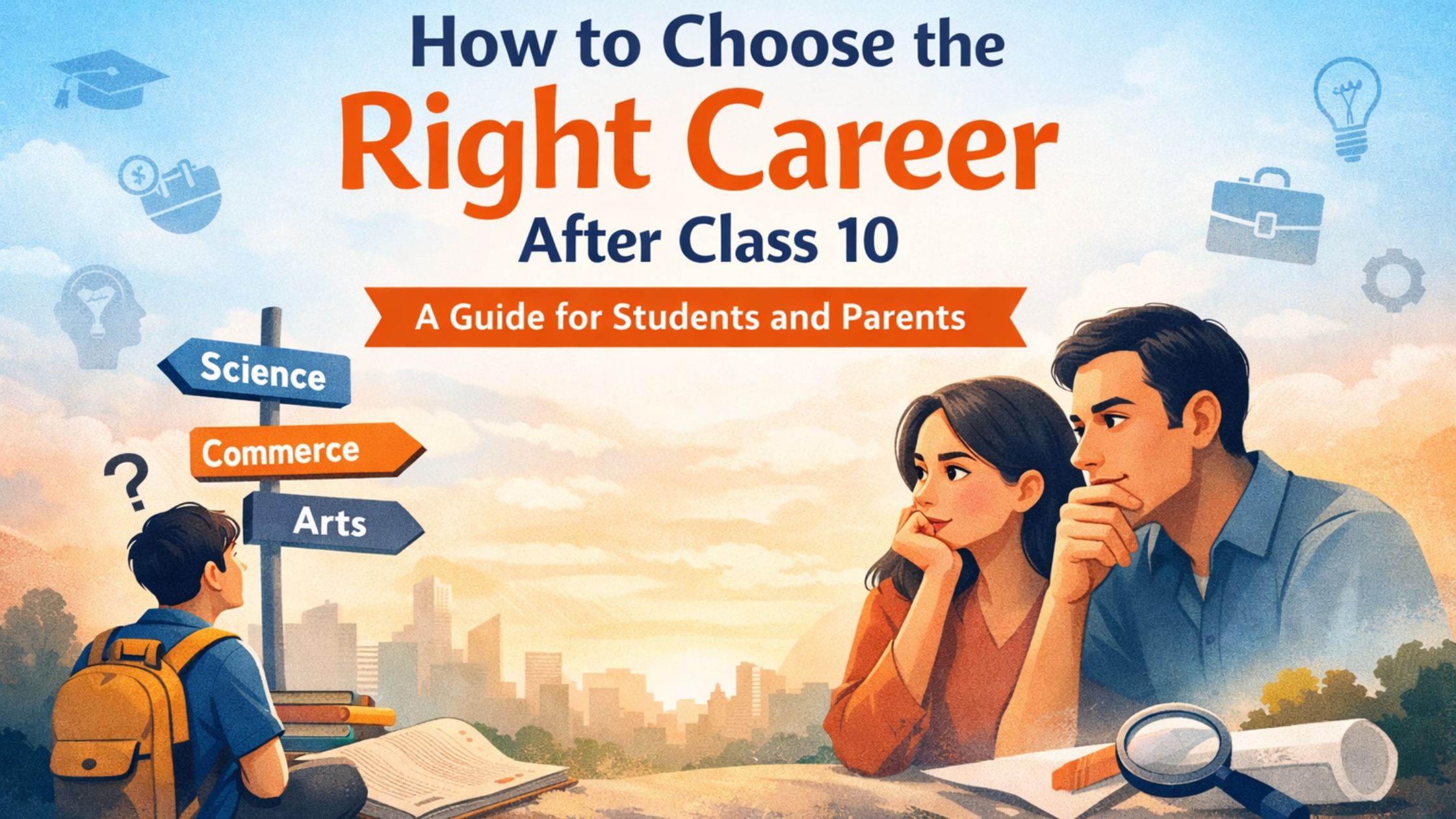
How to Choose the Right Career After Class 10: A Guide for Students and Parents
22 Mar 2026
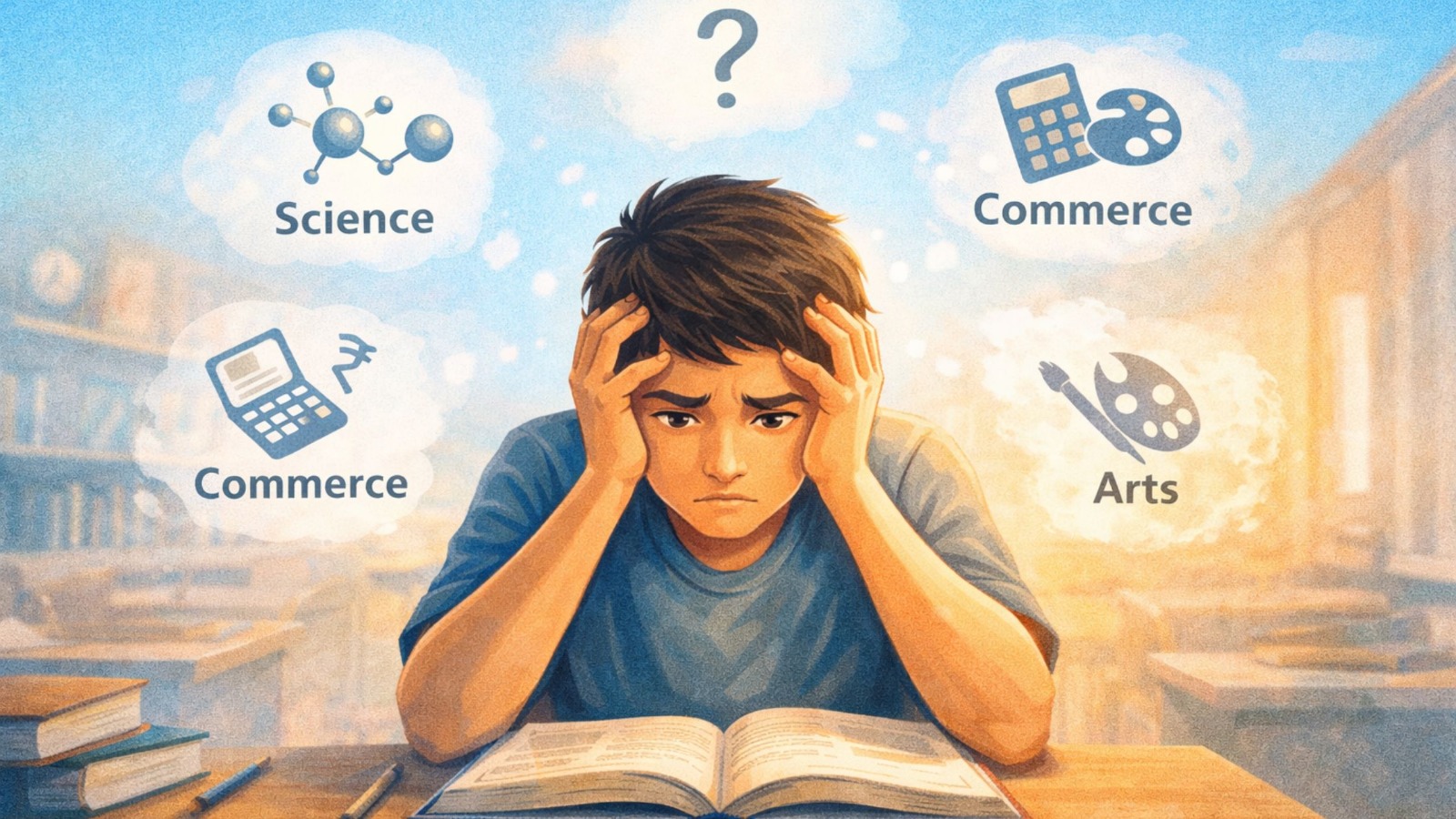
“Am I making the right choice?”
This is a question that quietly sits in the minds of most students after Class 10. Sometimes it shows up as confusion. Sometimes as pressure. And sometimes, it’s just a lingering discomfort that something about this decision feels… too big.
For parents, the question often sounds slightly different, but carries the same weight
“Will this decision shape my child’s entire future?”
At this stage, there are many voices around teachers, relatives, friends, societal expectations. Everyone seems to have an opinion about what the “right” path looks like. And in the middle of all this noise, the student’s own voice often becomes the hardest to hear.
It’s important to pause here and acknowledge something simple, yet often overlooked: this is not an easy decision. And it’s not supposed to be.
Why This Decision Feels So Heavy
Choosing a stream after Class 10 is often treated as the first “serious” decision of life. It carries an invisible message “choose wisely, because this will decide everything that follows”.
But at 15 or 16, most students are still in the process of discovering themselves. Their interests are evolving, their strengths are still unfolding, and their understanding of the world is just beginning to expand.
So when they’re asked to decide between Science, Commerce, or Arts, what they’re really being asked is: Who do you want to become?
And that’s a difficult question to answer so early.
Is This Really About Choosing a Career?
Not entirely.
What many people call a “career decision” at this stage is actually a directional choice, not a final destination. It is less about locking into a future, and more about choosing a path that allows further exploration.
However, when this distinction is not clear, the decision begins to feel irreversible—and that’s where anxiety builds.
Students start to think, What if I choose wrong? What if I regret this later? What if I lose opportunities?
These are not just doubts. They are signs that the decision is being made under pressure, without enough clarity.
What Often Influences This Decision
In many cases, the choice of stream is shaped by factors that feel logical on the surface, but may not fully reflect the student’s inner alignment.
Marks begin to guide decisions - I scored well in Science, so I should take it.
Peers influence direction - Everyone else is choosing Commerce.
Society subtly ranks streams - Some options are seen as “better” than others.
And beneath all this, there is often fear—of making the wrong choice, of disappointing expectations, of closing doors too early.
While these factors are understandable, they often miss a deeper question:
Does this truly fit the way the student thinks, learns, and grows?
Looking Beyond Marks: Understanding the Student
Every student has a unique way of engaging with the world. Some find comfort in logic and structure. Others are drawn toward creativity, people, or ideas that don’t have one fixed answer.
When this natural inclination is overlooked, the mismatch doesn’t always show up immediately. It appears slowly—through disinterest, low motivation, or a constant sense of effort without satisfaction.
On the other hand, when a student’s strengths and preferences are understood early, learning begins to feel less like pressure and more like participation.
This is why many families today are choosing to move beyond guesswork and explore more structured ways of understanding a student’s direction. Approaches like aptitude testing and career guidance programs can help bring together a student’s interests, abilities, and personality into a clearer picture making the decision less overwhelming and more informed.
Understanding the Streams Without Bias
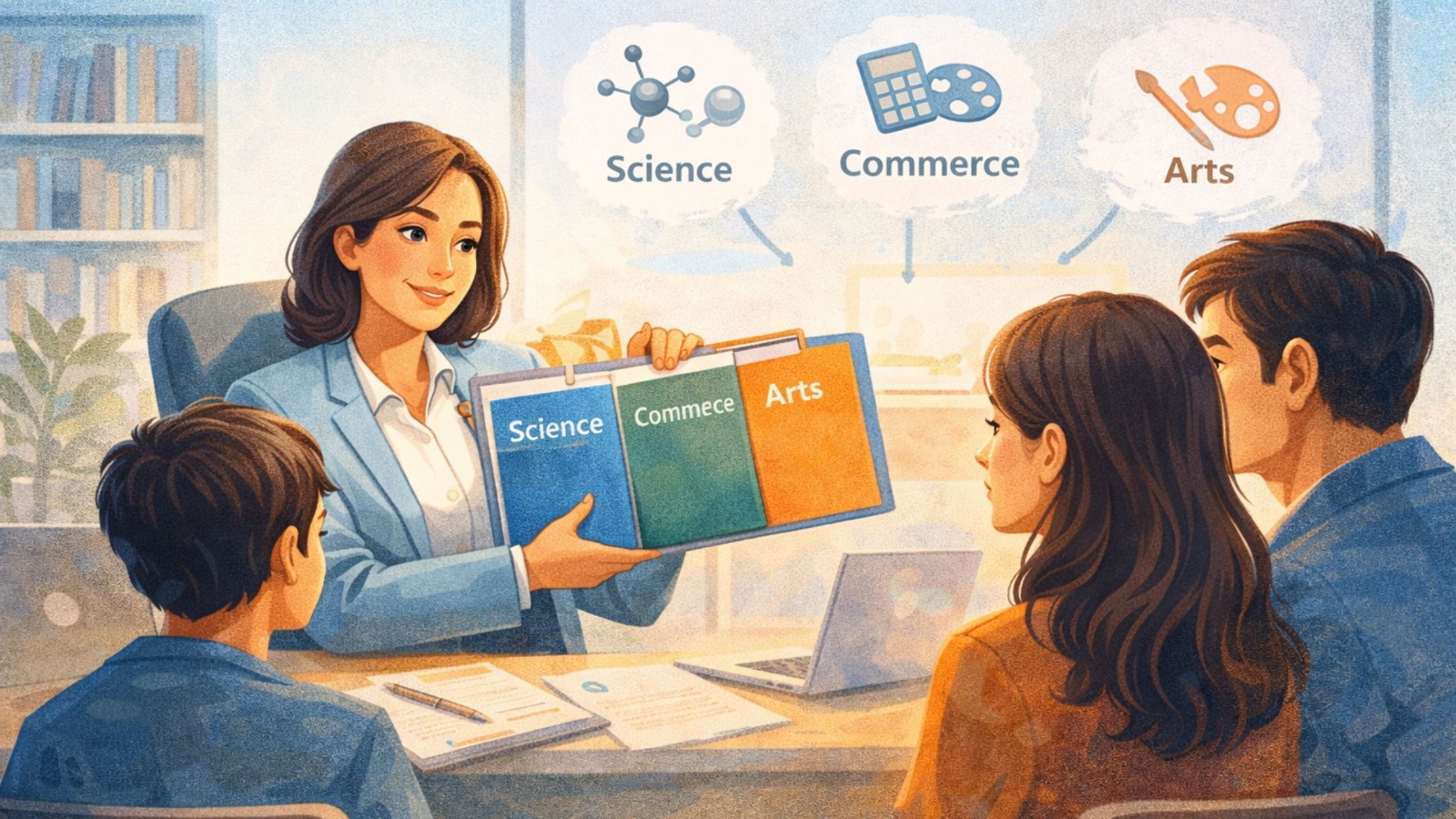
Each stream represents a different way of thinking, not a hierarchy of success.
Science often appeals to those who enjoy structured problem-solving and understanding how things work.
Commerce aligns with students who are interested in systems, finance, and practical decision-making.
Arts and Humanities open space for understanding people, society, behavior, and creative expression.
None of these paths are inherently superior. They are simply different.
What matters is not which stream is chosen but whether the student feels connected to it.
For Parents: Holding Space Without Taking Over
For parents, this phase often comes with a quiet responsibility to guide without overwhelming.
In trying to ensure a secure future, it can become easy to suggest what feels “right” based on experience or social understanding. But children today are growing into a world that is far more flexible and evolving than before.
What helps more than giving answers is creating space for exploration.
To ask, without rushing:
“What do you enjoy?”
“What feels difficult, even when you try?”
“What kind of work feels meaningful to you?”
And most importantly, to listen.
Because when a student feels heard, they are more likely to discover their own clarity.
When It’s Okay to Pause
Sometimes, even after multiple conversations, the confusion remains.
This doesn’t mean something is wrong. It simply means that the decision needs more time, more reflection, or a different kind of guidance.
Rushing through this phase often leads to decisions driven by urgency rather than understanding.
Taking a step back can actually move things forward in a more grounded way.
A Decision That Can Evolve
It’s easy to believe that this one choice will define everything ahead.
But most careers today are not linear. They evolve, shift, and expand over time.
What matters at this stage is not perfection but alignment.
A direction that allows the student to grow, adapt, and stay engaged.
A Thought to Sit With
If you’re feeling unsure, it doesn’t mean you’re lost. It means you’re thinking. And if you’re taking the time to reflect before deciding, you’re already approaching this more thoughtfully than most. Because this decision is not just about choosing a stream. It is about beginning to understand yourself.
FAQs
How do I know which stream is right for me after Class 10?
If you’re unsure, that’s completely normal. Instead of looking for the “best” stream, try to understand what feels naturally engaging to you, subjects you enjoy, the way you think, and what keeps your interest over time. The right choice usually comes from self-understanding, not comparison.
Is it necessary to take Science to have better career options?
This is a common belief, but not entirely true. Every stream today offers a wide range of opportunities. What matters more is how well the stream aligns with your abilities and interests, not its perceived status.
What if I choose the wrong stream?
The fear of making a wrong decision is very real. But most career paths today are flexible. Students often shift directions later based on new interests or opportunities. The goal is not to get it perfect, but to make a thoughtful and informed choice.
Should parents decide the stream for their child?
Parents play an important role in guiding, but the decision works best when it is collaborative. A student is more likely to stay motivated and perform well when they feel involved and understood in the decision-making process.
When should we consider career guidance or assessments?
If there is ongoing confusion, stress, or disagreement around the decision, it can be helpful to seek structured guidance. It’s not a sign of weakness, it's a way to make the process clearer and more balanced.

Ms Samindara Sawant
Ms. Samindara Sawant is a psychologist at Disha Counselling Centre with extensive experience working with children and families.
Related Blogs
No related blogs available.