
The Pressure to Have a Personality: Why Teens Feel They Need to “Brand” Themselves
14 Sept 2026
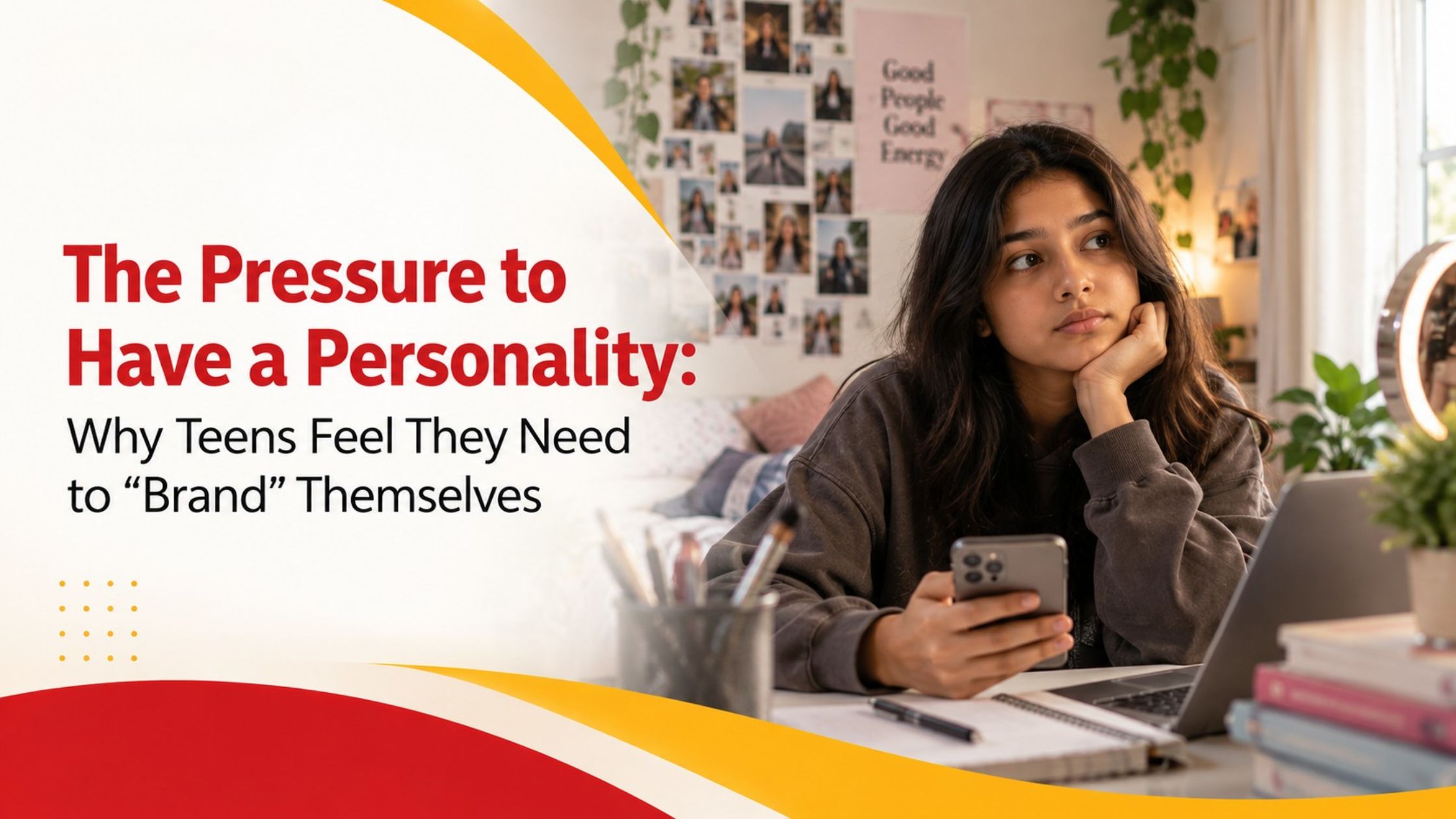
The Pressure to Have a Personality: Why Teens Feel They Need to “Brand” Themselves
There was a time when being a teenager allowed for a certain amount of inconsistency. You could spend six months obsessed with a band and then lose interest completely. You could dress one way in Class 9 and differently in Class 11. You could try photography, decide it wasn't for you, become interested in science, change your friend group, question an opinion you once strongly believed, and quietly move on. Much of this experimentation happened without becoming a permanent record of who you had once claimed to be.
For teenagers growing up today, that process can feel very different. Social media profiles ask them to choose photographs, bios, aesthetics, interests, communities, opinions, and sometimes very specific labels to communicate who they are. Algorithms quickly learn what they engage with and show them more of the same. Friends may begin associating them with a particular style, interest, personality, or viewpoint. Before they have fully worked out who they are, teenagers can feel an unexpected pressure to present a recognisable version of themselves to everyone else.
It can begin to resemble personal branding.
There is nothing inherently wrong with self-expression online. For many teenagers, digital spaces provide wonderful opportunities to discover interests, find communities, experiment creatively, and meet people who share experiences they may not encounter locally. The difficulty begins when self-expression quietly turns into self-definition, and a teenager starts feeling that they must know exactly who they are before they have had enough time to find out.
Adolescence Was Never Supposed to Come With a Finished Identity
One of the central developmental tasks of adolescence is identity formation. Teenagers naturally begin questioning childhood assumptions and exploring their own preferences, values, relationships, ambitions, and beliefs. They are supposed to experiment.
That experimentation can look confusing from the outside. A teenager who wanted to become an architect last year may suddenly become interested in psychology. Someone who was extremely outgoing at fourteen may become quieter at sixteen. Interests change, friendships shift, opinions become more nuanced, and ideas about the future are repeatedly revised.
None of this necessarily represents instability. Much of it represents development.
The problem arises when teenagers begin interpreting normal change as evidence that they don't know themselves well enough. They see peers who appear to have a distinctive aesthetic, clear interests, strong opinions, or a carefully constructed online presence and wonder, Why don't I know who I am yet?
But adolescence is not an audition for a finished personality. It is precisely the period during which young people are discovering one.
When Self-Expression Starts Becoming a Performance

Social media did not invent the desire to belong. Teenagers have always adapted clothing, language, music, and behaviour to fit social groups. What digital platforms have changed is the visibility and continuity of that process.
An offline conversation disappears. A profile remains.
If a teenager becomes known online as the fitness person, the funny one, the academic achiever, the gamer, the artist, the socially conscious one, or the person with a particular aesthetic, that identity can begin attracting attention and validation. Friends recognise it. Followers respond to it. Algorithms reinforce it.
Gradually, a subtle question can emerge: Do I still like this, or is this simply what people expect from me now?
The teenager who becomes known for academic achievement may feel uncomfortable admitting they are exhausted by constant competition. Someone whose personality online appears cheerful may struggle to show sadness. A young person who built friendships around one interest may worry that changing that interest will also change where they belong.
At that point, identity is no longer only something being discovered. It is also something being maintained.
Even Hobbies Can Start Feeling Like Personality Categories
Teenagers today have extraordinary access to communities built around almost every imaginable interest. That can be deeply positive. A young person interested in filmmaking, gaming, books, fashion, coding, music, fitness, anime, environmental issues, or hundreds of other subjects can find people who share that enthusiasm within minutes.
Yet online culture can sometimes turn an interest into an identity surprisingly quickly. Enjoying books becomes being a "book person." Exercising becomes a lifestyle. Clothing preferences become an aesthetic. Music becomes part of how someone is expected to behave.
There is a subtle difference between I enjoy this and this is who I am.
The first leaves room for curiosity. The second can sometimes create pressure to remain consistent.
Teenagers benefit from being reminded that hobbies are allowed to be temporary. They can become fascinated by something for three months and then move on. They do not have to monetise it, master it, build a portfolio around it, or incorporate it into their future career.
Trying something and deciding, "Actually, this isn't for me," is not wasted time. It is one of the ways young people learn about themselves.
Opinions Can Become Part of the Brand Too
The pressure is not limited to appearance and interests. Teenagers are also growing up in an environment where opinions are highly visible.
Online conversations frequently encourage immediate positions on complex social, cultural, and personal questions. For adolescents who are still developing their worldview, this can create pressure to have a confident answer before they have had enough experience to form one.
Changing your mind can then feel embarrassing because previous opinions may still exist in posts, comments, screenshots, or the memories of peers.
But intellectual development requires exactly this freedom. Teenagers need to encounter new information, reconsider assumptions, disagree respectfully, and sometimes admit, "I used to think differently."
Parents can support this by making home a place where changing one's mind is not treated as hypocrisy or weakness. Asking, "What made you think differently about that?" encourages reflection far more effectively than, "But last year you said the opposite."
Labels Can Provide Belonging Without Needing to Become Boxes
Labels deserve particular nuance. Finding language that describes an experience, personality, community, learning difference, interest, or aspect of identity can be enormously reassuring. Sometimes discovering a word for something a teenager has struggled to explain produces a powerful sense of recognition: Other people experience this too.
The problem is not the existence of labels. The problem is feeling imprisoned by them.
A label can be useful when it helps someone understand themselves. It becomes restrictive when a teenager starts believing they must behave according to everything associated with it, or that changing how they describe themselves means something has gone wrong.
Parents do not need to challenge every label their teenager explores, nor do they need to treat every new self-description as permanent. Curiosity is often more useful: What does that mean to you? What about it feels familiar?
That approach gives teenagers room to explore without demanding that today's answer become tomorrow's permanent identity.
Career Decisions Can Become Part of the Same Pressure
The pressure to define yourself can become especially visible when conversations turn towards careers. Adults frequently ask teenagers, "What do you want to become?" long before many young people have enough experience to answer confidently.
Once a teenager announces an ambition, however, changing it can feel like going backwards. The student who has told everyone they want to study medicine may find it difficult to admit they are increasingly interested in design. Another may continue pursuing a stream because being "the science student" has become part of how family and friends see them.
Career exploration works better when teenagers are allowed to remain curious. Structured career assessments and guidance can support this process by helping young people explore their interests, aptitude and possible pathways without expecting them to build their entire future around an identity they chose too early.
The purpose of career exploration should be greater self-understanding, not finding another label that a teenager must carry forever.
Parents Can Give Teenagers Something the Internet Often Doesn't: Room to Change
Parents cannot remove the social pressures teenagers encounter, and attempting to criticise every trend, aesthetic, platform, or identity they explore will probably make conversations harder rather than easier. What families can provide is something increasingly valuable: a relationship in which teenagers do not have to perform a consistent version of themselves.
That might mean resisting comments such as, "I thought you hated that," when an interest changes. It might mean allowing clothing styles, hobbies, ambitions, and opinions to evolve without turning every change into a major discussion. It can also mean praising qualities that are less visible online—kindness when nobody is watching, persistence after disappointment, curiosity, responsibility, and the ability to reconsider an idea.
For some teenagers, questions about identity, belonging, self-worth, peer acceptance, or the pressure to maintain a particular image can become emotionally overwhelming. When these struggles begin affecting everyday wellbeing or relationships, counselling support for teenagers can offer a private space to explore thoughts and feelings without needing to present a polished version of themselves.
The aim is not to tell teenagers who they really are. It is to give them enough emotional safety to keep discovering it.
Your Teen Is Allowed to Become Someone They Didn't Predict
Perhaps one of the most useful messages adults can give teenagers today is surprisingly simple: you are allowed to change.
You can stop liking something you once loved. You can discover an interest nobody associates with you. You can reconsider an opinion. You can become quieter or more outgoing. You can change your mind about a career. You can belong to a community without allowing it to define every part of you. You can look back at who you were two years ago and barely recognise that person.
None of this means you were being fake before. It means you grew.
Teenagers already live in a world that constantly invites them to describe, display, categorise, and communicate who they are. Home does not need to become another place demanding a finished answer.
Sometimes the healthiest thing parents can offer is permission for the answer to "Who are you?" to remain unfinished for a while.
Because adolescence is not the stage when a young person should finally have themselves figured out.
It is the stage when they should be free to keep finding out.
FAQs
Is it normal for teenagers to change their personality and interests frequently?
Yes. Adolescence involves significant identity exploration, so changes in interests, style, friendships, opinions, and ambitions can be a normal part of development.
Does social media influence teenage identity?
Social media can influence how teenagers present themselves and expose them to communities, aesthetics, trends, opinions, and lifestyles. Its impact varies depending on how young people use these spaces and how strongly online feedback influences their self-worth.
Should parents worry when teenagers use labels to describe themselves?
Not automatically. Labels can help teenagers understand experiences and find belonging. Parents can remain curious while allowing room for their child's understanding of themselves to develop over time.
How can parents help teenagers develop a stronger sense of self?
Give them opportunities to explore different interests, make age-appropriate decisions, change their minds, experience manageable mistakes, and talk without feeling that every thought must become a permanent decision.
When can professional support be useful?
If identity concerns, peer pressure, self-esteem difficulties, anxiety, or fear of judgment are causing persistent distress or interfering with everyday life, professional counselling may provide additional support.

Ms Samindara Sawant
Ms. Samindara Sawant is a psychologist at Disha Counselling Centre with extensive experience working with children and families.
Related Blogs
No related blogs available.