
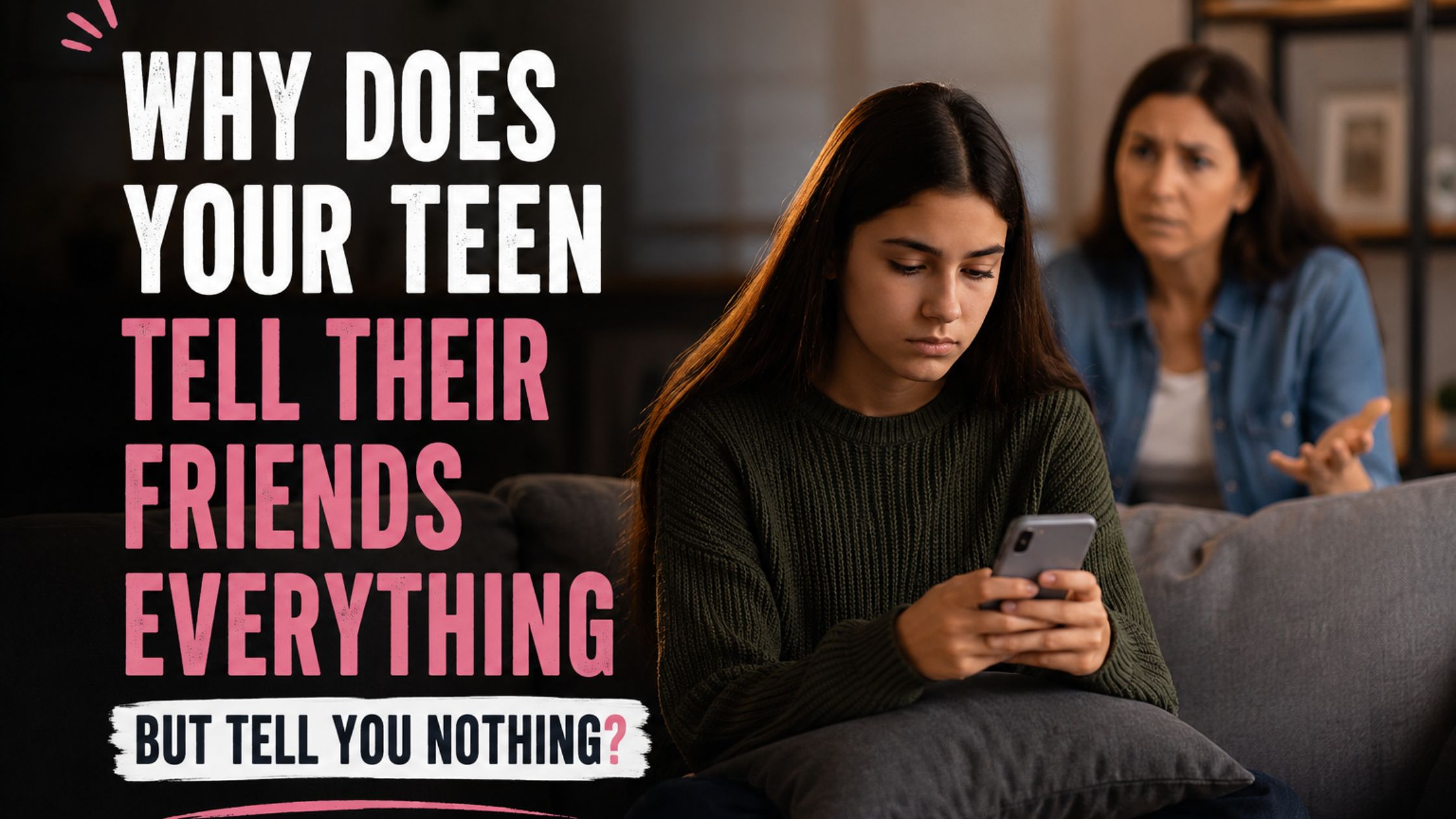
Growing up comes with a quiet shift that many parents find difficult to understand.
The child who once narrated every detail of their day suddenly begins responding with, "It was fine." Questions that once led to long conversations now receive one-word answers. Yet, somehow, you hear that they spend hours talking to their friends. They laugh together, share their worries, ask for advice, and discuss things they never seem to mention at home.
For many parents, this can be painful.
"Have I done something wrong?"
"Why does my child trust their friends more than me?"
The truth is, this change is a normal part of adolescence. It doesn't necessarily mean your teenager loves you less or values your opinion less. It often reflects the developmental changes that come with growing up and learning to become independent.
Understanding why this happens can help parents move from frustration to connection.
Why Friends Become So Important During the Teenage Years
Adolescence is a stage where teenagers begin asking themselves an important question: "Who am I?"
While parents continue to provide guidance and stability, friends become the people with whom teenagers explore this emerging sense of identity. They discuss shared experiences, compare thoughts, seek reassurance, and often feel that their friends "just get it" because they are navigating similar challenges.
Whether it's exam pressure, friendships, social media, body image, or first relationships, teenagers often believe their peers understand these experiences in ways adults cannot.
This doesn't mean parents become unimportant. It simply means that friends temporarily take on a different role in a teenager's emotional world.
Emotional Safety Matters More Than Authority

Many parents assume that if they always give good advice, their children will naturally come to them with problems.
But teenagers aren't always looking for solutions. Sometimes, they're looking for emotional safety.
Think about the last time your teenager shared something difficult.
Did the conversation immediately become about fixing the problem? Did it turn into a lecture? Did it end with advice before they had finished explaining what happened?
Parents often respond this way because they care deeply. They want to protect their children from making mistakes or getting hurt.
However, teenagers sometimes interpret these responses differently. Instead of feeling heard, they feel judged. Instead of feeling understood, they feel evaluated.
Over time, they may decide it's easier to talk to someone who simply listens first.
Emotional safety develops when teenagers believe they can express themselves without immediately being corrected, criticised, or interrupted.
Why Teenagers Sometimes Hide Things From Parents
When teenagers stop sharing, it isn't always because they're hiding something serious. Often, they're trying to avoid reactions they find overwhelming.
Some common reasons include:
- They don't want to disappoint their parents.
- They fear being misunderstood.
- They worry about losing privileges if they admit they've made a mistake.
- They want to solve certain problems independently.
- They don't yet have the words to explain how they feel.
Parents may interpret silence as secrecy. Teenagers often experience it as self-protection. Recognising this difference can completely change how future conversations unfold.
Signs Your Teen Still Trusts You
Many parents assume that fewer conversations mean the relationship is weakening. That isn't always true.
Trust often appears in quieter ways during adolescence. Your teenager may still ask for your opinion before making an important decision.
They may sit near you even without talking. They may share small details instead of major ones. They may still look to you for comfort during stressful moments.
These seemingly ordinary behaviours often indicate that the relationship remains secure, even if communication looks different than it did during childhood.
Rather than measuring trust by the quantity of conversations, pay attention to whether your teenager still turns toward you when it truly matters.
How Parents Can Rebuild Open Communication
Building trust isn't about finding the perfect words. It's about creating an environment where conversations feel safe.
Instead of beginning with questions that sound like an investigation, try showing genuine curiosity.
Rather than asking, "Why didn't you tell me?"
Try asking, "That sounds like it was difficult. What was that like for you?"
Instead of immediately offering advice, spend a little more time listening. Resist the urge to interrupt or solve the problem too quickly.
Sometimes, teenagers don't need answers straight away. They simply need someone who is willing to stay with their emotions without rushing to change them.
Small, everyday conversations also matter more than many parents realise.
Talking during a car ride, while cooking together, or during a walk often feels less intimidating than sitting down for a formal discussion. These moments create opportunities for connection without pressure.
When Should Parents Be Concerned?
While increased privacy is a normal part of adolescence, certain changes deserve closer attention.
If your teenager becomes consistently withdrawn, avoids all family interaction, appears persistently anxious or low, experiences significant changes in sleep or appetite, or loses interest in activities they once enjoyed, it may indicate that something more is happening beneath the surface.
Similarly, if communication has completely broken down despite repeated, calm attempts to reconnect, additional support may be helpful.
Seeking Child & Adolescent Counselling & Psychotherapy is not an indication of poor parenting. Instead, it can provide teenagers with a safe, neutral space to express themselves while also helping families strengthen communication and understanding.
In some situations, when emotional, behavioural, or developmental concerns continue to affect a teenager's wellbeing, Psychological Assessments for Children can provide valuable insights that guide appropriate support and intervention.
A Relationship Worth Protecting
There will be phases when your teenager talks more to their friends than to you. That is not necessarily a sign that you are losing them. Growing up naturally involves creating stronger peer relationships while gradually becoming more independent.
The goal isn't to compete with your teenager's friends. It is to remain the person they know will listen without judgment, support without controlling, and guide without taking over.
When parents create emotional safety instead of emotional pressure, teenagers are far more likely to return not because they have to, but because they genuinely want to.
And that is the kind of trust that often lasts long after adolescence has passed.
FAQs
Is it normal for teenagers to tell their friends more than their parents?
Yes. During adolescence, peer relationships become increasingly important as teenagers develop their identity and independence. This doesn't mean parents are no longer important.
How can I encourage my teenager to talk to me?
Focus on listening without immediate judgment or advice. Create regular opportunities for relaxed conversations and show genuine curiosity about their experiences.
Should I worry if my teenager becomes more private?
Some increase in privacy is a normal part of adolescence. Concern arises when privacy is accompanied by significant emotional, behavioural, or social changes.
Why do teenagers often prefer talking to friends?
Friends often share similar experiences and may feel less judgmental. Teenagers also use peer relationships to explore independence and identity.
When should I consider professional support?
If your teenager shows persistent withdrawal, emotional distress, significant behavioural changes, or communication has broken down completely, seeking professional guidance can be beneficial.